
Agate stripping guides, historically vital in fly fishing, represent a blend of artistry and function. These guides, crafted from banded chalcedony, offer unique performance.
What are Agate Stripping Guides?
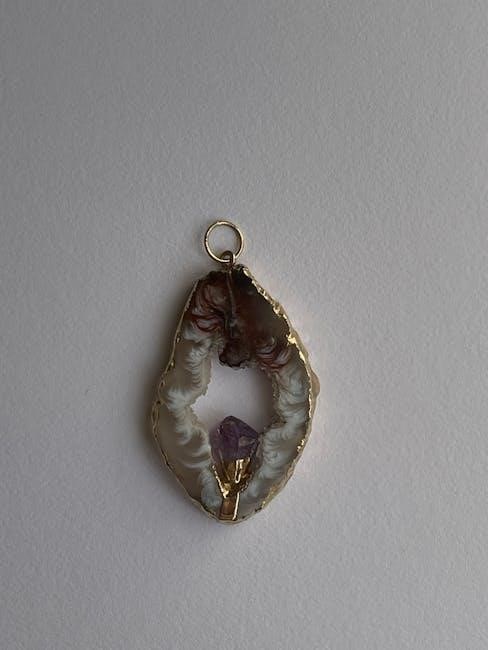
Agate stripping guides are specialized components used in fly rod construction, positioned near the reel seat to manage fly line flow during casting. Traditionally crafted from naturally banded agate, a variety of chalcedony, they provide a smooth, low-friction surface. These guides aren’t merely functional; they’re prized for their aesthetic beauty and historical significance, representing a classic element of handcrafted fly rods. Their internal diameter is crucial for line management.
Historical Significance of Agate in Fly Fishing
Agate has been a cornerstone of fly fishing for over a century, favored by early rod makers for its durability and line-handling properties. Before modern materials, agate offered a superior, smooth surface. These guides became symbols of quality and craftsmanship, representing a dedication to traditional fly rod building techniques. Their use reflects a rich heritage within the sport.
Understanding Agate Varieties for Guides
Agate varieties, like moss and fire agate, differ in banding and transparency. True agates are distinct from chalcedony, impacting guide strength and overall performance.
True Agates vs. Chalcedony
Distinguishing true agates from chalcedony is crucial for guide quality. Agates are a variety of chalcedony, specifically banded quartz, formed within volcanic or metamorphic rocks. However, not all banded chalcedony qualifies as true agate. Varieties like moss agate and fire agate are often mislabeled; they’re technically chalcedony. Understanding this difference impacts strength, durability, and the final performance of the stripping guide, influencing its suitability for fly rod construction.
Moss Agate and Fire Agate – Considerations
Moss and fire agate, while visually appealing, present unique challenges for stripping guides. These aren’t “true” agates, being forms of chalcedony lacking the consistent banding. Their structure can be less durable, potentially cracking during soldering or use. Careful selection and bezeling are vital. Consider their aesthetic qualities alongside structural integrity when choosing these varieties for crafting high-quality fly fishing guides.
Impact of Banding on Guide Strength
Agate’s banding significantly impacts guide strength. Consistent, tight banding generally indicates a more robust stone, resisting cracking during shaping and soldering. Wider or irregular bands can represent weaker points. The orientation of bands relative to stress during use is also crucial; aligning them strategically enhances durability. Careful agate selection prioritizes dense, uniform banding for reliable performance.
Materials and Tools Required
Constructing agate guides demands specific materials: agate stones, bezel wire (brass or nickel silver), soldering equipment, flux, and polishing compounds for a refined finish.
Agate Selection Criteria
Choosing agate for guides requires careful consideration. Look for stones free of internal fractures or inclusions that could compromise strength during shaping and soldering. Banding should be consistent and tight, indicating durability. True agates, unlike moss or fire agate (chalcedony varieties), are preferred for their hardness and resistance to cracking under heat. Inspect for natural flaws and select stones with a smooth, even surface for optimal bezel fit and performance.
Bezel Wire (Brass, Nickel Silver, etc.)
Bezel wire selection is crucial for a secure agate fit. Brass offers ease of soldering but may tarnish; nickel silver provides superior corrosion resistance and a brighter finish. Wire gauge should match the agate’s size – typically 18-22 gauge. Consider the aesthetic; silver complements darker agates, while brass suits warmer tones. Ensure the wire is half-hard for shaping and maintains its form during the soldering process.
Soldering Equipment and Supplies
Essential tools include a torch (propane or butane), flux, solder (silver-bearing is recommended), tweezers, and a fire-resistant soldering surface. A magnifying glass aids precision. Flux cleans metal surfaces for strong bonds. Invest in quality solder to prevent failures. Ventilation is vital due to fumes. Practice temperature control to avoid agate cracking during the delicate soldering process.
The Stripping Guide Construction Process
Construction begins with careful agate preparation, followed by bezel creation and precise soldering to the frame. Skillful execution ensures a durable, functional, and beautiful guide.
Preparing the Agate Stone
Initial agate selection demands scrutiny for flaws and optimal banding. Careful shaping, often using a lapidary saw and grinding wheels, is crucial; Achieving the desired internal diameter requires precision. Polishing reveals the stone’s beauty and ensures smooth fly line passage. This meticulous preparation minimizes cracking risks during subsequent soldering stages, preserving the agate’s integrity and enhancing the guide’s overall quality.
Creating the Bezel
Bezel construction begins with selecting appropriate wire – brass or nickel silver are common choices. The wire is carefully formed to precisely fit the agate’s circumference, ensuring a snug, protective enclosure. Accurate measurement and bending are vital for a seamless fit. The bezel’s design should complement the agate’s shape, preparing it for secure soldering to the guide’s frame.
Soldering the Bezel to the Frame
Attaching the bezel requires precision soldering, uniting it firmly to the wire frame. Flux application prevents oxidation, ensuring a clean solder joint. Gentle, controlled heat is crucial to avoid agate cracking – a common concern. Consistent solder flow around the bezel’s perimeter guarantees structural integrity and a durable connection for long-lasting performance.
Soldering Techniques & Temperature Control
Precise temperature control is paramount when soldering agate guides, preventing cracking. Optimal solder types and careful heating ensure strong, lasting joints without damaging the stone.
Preventing Agate Cracking During Soldering
Agate’s susceptibility to cracking at relatively low temperatures necessitates cautious soldering practices. Gradual heating and cooling cycles are crucial, avoiding thermal shock. Employing a heat-absorbing soldering block helps dissipate heat away from the stone. Flux application shields the agate, minimizing direct heat exposure.
Furthermore, avoid excessive solder quantity, as it generates more heat during melting. Proper technique and controlled temperatures are key to preserving the agate’s integrity.
Optimal Solder Types for Agate Guides
Selecting the right solder is paramount when constructing agate stripping guides. Silver-based solders, particularly those with lower melting points, are generally preferred to minimize heat stress on the agate. Lead-free solders are increasingly recommended for environmental and health considerations.
Avoid high-temperature solders, as they significantly increase the risk of cracking. A fluid, well-flowing solder ensures a strong, reliable joint without prolonged heating.
Post-Soldering Cleaning and Finishing
After soldering, meticulous cleaning is crucial. Employ a mild flux remover to eliminate residue, preventing corrosion and ensuring a bright finish. Gentle polishing with a soft cloth enhances the agate’s natural luster and the bezel’s shine.
Avoid abrasive compounds that could scratch the agate. A final inspection confirms solder joint integrity and a smooth, snag-free surface for optimal fly line travel.

Frame Materials and Design
Wire frames, traditionally constructed from brass or nickel silver, securely hold the agate. Foot design is critical for firm attachment to the fly rod blank.
Wire Frame Construction
Constructing the wire frame demands precision; typically, builders utilize brass or nickel silver wire, carefully bent to cradle the agate stone. The wire’s gauge influences both strength and aesthetics. Forming loops and wraps requires specialized pliers, ensuring a snug, secure fit around the agate.
Consistent wire tension is paramount, preventing distortion during soldering. The frame must accommodate the agate’s shape while providing stable mounting points for attaching to the rod.
Foot Design for Secure Rod Attachment
The guide’s foot, crucial for rod bonding, traditionally features wire wraps meticulously formed to conform to the rod’s taper. These wraps distribute stress, preventing cracking or slippage. Variations include simple wraps and more elaborate, multi-turn designs for enhanced grip.
Proper foot alignment ensures smooth line travel. Builders often utilize thread wraps and epoxy to firmly secure the agate guide to the fly rod blank, guaranteeing longevity.
Agate Guide Dimensions and Rod Compatibility
Matching agate size to fly line weight is essential for optimal performance. Internal diameter dictates line flow; larger diameters suit heavier lines, ensuring smooth casting.
Matching Guide Size to Fly Line Weight
Selecting the correct agate guide dimensions is crucial, directly impacting casting efficiency and line control. Generally, lighter fly lines – such as 2wt to 4wt – pair well with smaller internal diameters, typically ranging from 4mm to 6mm. Heavier lines, from 6wt upwards, benefit from larger diameters, around 7mm to 9mm, to prevent friction and ensure smooth line passage.
Internal Diameter Considerations
The agate guide’s internal diameter significantly influences line flow; too small, and it creates friction, hindering casting distance and accuracy. Conversely, an excessively large diameter can lead to line slap and tangling. A snug, yet unrestricted fit is ideal, allowing the fly line to glide freely. Careful measurement is key for optimal performance.
Troubleshooting Common Issues
Common problems with agate guides include cracking, solder joint failures, and ill-fitting bezels. Prevention through careful technique and material selection is crucial for longevity.
Agate Cracking – Causes and Prevention
Agate’s susceptibility to cracking during soldering stems from thermal shock. Rapid temperature changes induce stress within the stone’s structure. To mitigate this, employ slow, controlled heating and cooling processes. Utilize appropriate solder types with lower melting points.
Furthermore, avoid direct flame contact with the agate itself. Pre-warming the stone can also reduce thermal stress. Certain agate varieties, particularly those with internal fractures, are more prone to cracking, demanding extra caution.
Solder Joint Failures
Solder joint failures in agate stripping guides often result from insufficient wetting, contamination, or excessive mechanical stress. Ensure surfaces are meticulously cleaned with appropriate flux before applying solder. Employ the correct solder alloy for brass or nickel silver bezels.
Avoid overheating, which weakens the joint. Proper joint design, with adequate solder volume, is crucial for long-term durability. Inspect joints carefully for voids or incomplete fusion.
Bezel Fit Problems
Bezel fit issues with agate stripping guides commonly arise from imprecise bezel wire shaping or variations in agate stone dimensions. A too-tight bezel risks cracking the agate during soldering or expansion/contraction. Conversely, a loose fit compromises security.
Careful measurement and gradual bezel adjustment are essential. Utilize bezel pushers to achieve a snug, even fit before soldering, ensuring minimal stress on the delicate agate.
Advanced Techniques
Skilled craftspeople explore custom bezel designs and decorative elements, enhancing agate stripping guides with engraving or incorporating contrasting metals for unique aesthetics.
Creating Custom Bezel Designs
Beyond standard bezels, artisans can forge unique designs reflecting personal style or rod aesthetics. This involves carefully shaping bezel wire – brass, nickel silver, or gold – to precisely complement the agate’s form. Techniques include scalloped edges, applied wire accents, or even miniature engravings. Precision is key; the bezel must securely hold the agate while showcasing its natural beauty, demanding skillful metalworking and a keen eye for detail.
Incorporating Decorative Elements
Elevate agate guides with subtle embellishments. Consider delicate filigree work around the bezel, adding a touch of Victorian elegance. Tiny gold or silver inlays can accentuate agate banding, enhancing its natural patterns. Carefully placed gemstones – perhaps small garnets or sapphires – offer contrasting color. Remember, decorative elements should complement, not overwhelm, the agate’s inherent beauty and the guide’s functional purpose.
Sourcing Agate and Supplies
Reliable vendors are key for quality agate and materials. Gemstone suppliers and fly tying shops offer bezels, wire, and solder for crafting guides.
Reputable Gemstone Suppliers
Finding quality agate requires sourcing from trusted suppliers. Look for vendors specializing in cabochons or offering a diverse selection of chalcedony; Consider Stonetools.com, Rio Grande, or local lapidary shops for consistent quality and variety. Ensure they clearly identify agate types – true agate versus moss or fire agate – and provide accurate dimensions. Prioritize suppliers with positive reviews and transparent sourcing practices to guarantee authentic gemstones for your stripping guides.
Fly Tying Material Vendors
While not primary agate sources, some fly tying vendors stock pre-made agate guides or bezel wire essential for construction. Wapsi Fly, Hareline Dubbing, and similar companies may carry components. These are convenient for smaller projects, but selection can be limited. Supplement with dedicated gemstone suppliers for broader agate choices and better pricing, ensuring quality materials for durable, classic stripping guides.
Agate Guide Maintenance and Repair
Regular cleaning and polishing preserve agate’s beauty. Re-soldering loose bezels is often necessary, ensuring secure agate retention and continued functionality of the fly rod guide.
Cleaning and Polishing
Maintaining agate guides involves gentle cleaning to remove dirt and grime. Use lukewarm water with a mild soap, avoiding harsh chemicals that could dull the stone’s luster. A soft cloth or brush is ideal; avoid abrasive materials. Polishing with a jeweler’s cloth restores shine, enhancing the agate’s natural bands and preserving its aesthetic appeal for years of fly fishing enjoyment.
Re-soldering Loose Bezels
Addressing loose bezels requires careful attention to prevent agate cracking. Thoroughly clean the area before applying fresh solder. Use a low-temperature solder suitable for delicate work, and apply heat judiciously. Ensure a secure joint without overheating the agate. Post-soldering, clean and polish to restore the guide’s integrity and functionality for continued use.

The Future of Agate Guides in Fly Fishing
Agate guides face competition from modern materials, yet traditional craftsmanship persists. Preserving this art form relies on continued interest and skilled artisans.
Modern Alternatives and Trends
Contemporary fly rod building increasingly favors ceramic and silicon carbide guides due to their durability, consistent performance, and lower production costs. These materials offer excellent line flow and resist wear effectively. However, a resurgence of interest in classic fly rods fuels a niche demand for authentic agate guides.
This trend highlights a desire for historical accuracy and the unique aesthetic qualities that agate provides, appealing to collectors and enthusiasts valuing traditional techniques.
Preserving Traditional Craftsmanship
Maintaining the art of agate guide creation requires dedicated artisans skilled in lapidary work, delicate soldering, and precise fitting. Passing down these techniques is crucial, as the process demands patience and a deep understanding of materials. Workshops and mentorships play a vital role in ensuring this heritage isn’t lost, safeguarding a unique aspect of fly fishing history;

Resources for Further Learning
Explore online forums and communities dedicated to fly rod building for valuable insights. Books and articles offer detailed guidance on crafting agate stripping guides.
Online Forums and Communities
Dedicated online platforms, such as The Classic Fly Rod Forum, provide a wealth of knowledge regarding agate stripping guides. These communities foster discussions on techniques, materials, and troubleshooting. Experienced rod builders readily share their expertise, offering guidance on soldering, agate selection, and bezel construction. Engaging with these forums allows for collaborative learning and access to a network of passionate craftspeople, enhancing your skills and understanding of this traditional art form.
Books and Articles on Fly Rod Building
Comprehensive literature on fly rod building often dedicates sections to traditional guide construction, including agate stripping guides. These resources detail the historical context, material selection, and precise techniques required for crafting these guides. Seek publications focusing on classic rod making for in-depth instructions on bezeling, soldering, and achieving a secure fit. They provide a foundational understanding for aspiring builders.